
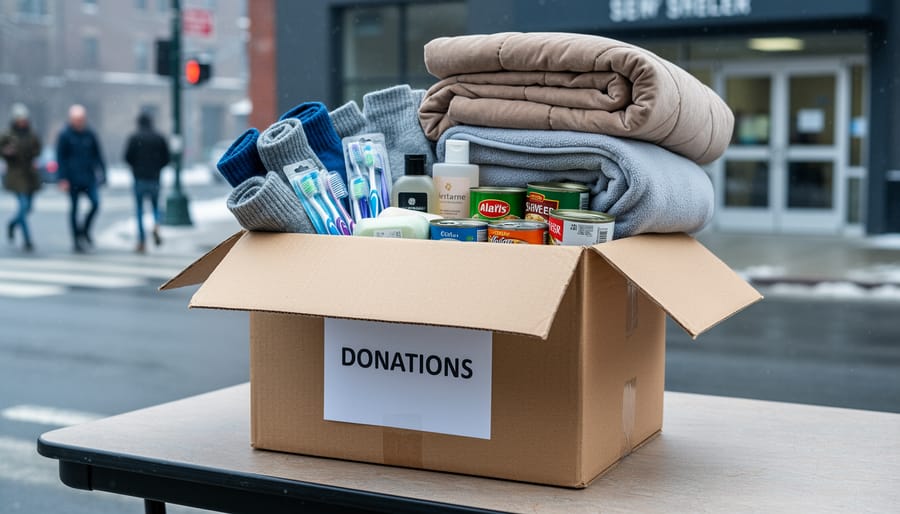
Homeless shelters donations drop off dramatically after the holiday season ends, leaving vulnerable Canadians without essential supplies during critical winter months and throughout the year. This cyclical decline in contributions creates a persistent gap between what shelters need and what they receive, forcing many organizations to ration resources or turn people away when demand remains high. The solution lies in understanding this pattern and organizing strategic donation drives that deliver support during these overlooked periods.
Every January, shelter managers across Canada watch their stockrooms empty as the generosity of November and December fades. The same families who donated coats and canned goods before Christmas often forget that homelessness doesn’t take a break in February or July. This isn’t about blame. It reflects how most of us think about giving: we respond to seasonal prompts and visible campaigns, then return to daily routines until the next holiday arrives.
Yet people experiencing homelessness face consistent needs throughout every season. Shelters require hygiene products, clean socks, non-perishable food, and bedding year-round, not just when cold weather makes headlines. The drop-off in donations creates real consequences. Programs get cut back, meal portions shrink, and staff must choose between competing urgent needs with insufficient resources.
Faith communities and socially conscious Canadians hold the power to change this pattern. By recognizing when donations drop off and responding with intentional, organized drives during these gaps, we transform sporadic charity into sustained support that reflects our values of dignity and justice for every person.
The Reality Behind Declining Shelter Donations
Seasonal Gaps That Leave Shelters Vulnerable
The calendar tells a story homeless shelters know by heart. December brings overflowing donation bins and media coverage of shelter need. But by mid-January, as holiday decorations come down and news cycles move on, donations to homeless shelters drop off sharply, often plummeting 60-70% compared to December levels. Shelters across Canada report that February through April represent some of their leanest months, even as winter weather persists and need remains constant.
Summer creates a different but equally damaging gap. Many Canadians assume homelessness becomes easier in warm weather, but shelters serving communities from Vancouver to Halifax consistently report critical shortages between May and September. Donations drop off precisely when facilities need lightweight clothing, sunscreen, water bottles, and resources to address heat-related health crises. Media attention vanishes almost entirely during these months, leaving shelters scrambling to meet demand with depleted resources.
This cyclical pattern reveals a painful disconnect: homelessness operates year-round, but public compassion follows a seasonal schedule tied to holidays and harsh weather headlines. When cameras aren’t rolling and guilt-driven giving subsides, the people experiencing homelessness remain, but the support systems meant to serve them face dangerous shortfalls. Shelters find themselves rationing supplies, turning away donations of winter coats in July while desperately needing socks, and watching their capacity to provide dignified care erode during the very months when community attention could sustain them through the gaps.
The Hidden Cost of Donation Fatigue
When compassion wells run dry, homeless shelters donations drop off most sharply among those who once gave most faithfully. Regular donors begin missing their monthly contributions not from hardened hearts, but from exhaustion. Donor fatigue is being inundated with constant appeals from multiple causes, creating emotional overwhelm that paradoxically pushes away committed supporters.
Faith communities face particular vulnerability here. Members who regularly contribute to church-based drives can feel guilt when they need to step back, yet continuing beyond capacity breeds resentment rather than joy in giving. The emails, social media appeals, and Sunday announcements blur together until even those with generous spirits tune out rather than engage.
This fatigue compounds the seasonal drop-off problem. When post-holiday exhaustion coincides with spring fundraising campaigns for other causes, donations to homeless shelters fall through the cracks. The solution isn’t demanding more from tired givers, but restructuring how we sustain support so the burden spreads across wider shoulders, allowing rest without creating gaps.
What Shelters Actually Need When Donations Drop

Beyond Blankets: Year-Round Essential Items
When homeless shelters donations drop off after the holidays, it’s the unglamorous essentials that disappear first. While winter coats and blankets dominate giving campaigns, shelters face critical shortages of items people rarely think about, the everyday necessities that preserve dignity and health year-round.
Hygiene products top the list of chronic needs. Travel-size shampoo, deodorant, toothpaste, and feminine hygiene products run out quickly but rarely appear in donation bins. Many shelters also struggle to stock adult diapers for elderly residents and baby wipes for quick cleanups when shower access is limited. These aren’t luxury items; they’re the difference between someone feeling human or invisible.
Undergarments and socks are another gap. New underwear in all sizes, sports bras, and fresh socks wear out constantly but get donated infrequently. Summer creates its own shortage: lightweight shirts, shorts, breathable fabrics, and sun protection disappear when donors assume winter need only. A person experiencing homelessness in July still needs clean clothes and shelter, yet summer drives are rare.
Fresh food is perpetually scarce. While canned goods pile up in November, shelters need perishables like fresh fruit, vegetables, eggs, and bread throughout the year. Gift cards to grocery stores allow shelter staff to purchase what’s actually needed rather than managing donations of expired or unwanted items.
Understanding the full scope of hygiene and clothing needed helps your drive address real gaps, not just visible ones.
Organizing Donation Drives That Make a Lasting Impact

Partnership Over Pity: Connecting With Shelters Directly
The most effective donation drives begin with a phone call, not a collection bin. Before launching your drive, reach out to two or three homeless shelters in your area and ask what they actually need right now. This simple step transforms well-meaning generosity into genuine partnership.
Many shelters face “donation dumping”, receiving truckloads of items they can’t use or store, which then drain staff time and resources to sort and dispose of. When you connect directly with shelter coordinators, you learn their immediate priorities: perhaps they’re overstocked on winter coats in March but desperately need men’s jeans, or their hygiene supplies are running low while canned goods pile up.
This relational approach reflects the biblical call to walk alongside those in need rather than simply giving from a distance. Schedule a visit to understand how the shelter operates. Ask about their storage capacity, distribution systems, and seasonal gaps. Some shelters prefer financial donations during certain periods, while others need specific items at particular times.
Build an ongoing relationship. Share your contact information and encourage the shelter to reach out when needs shift. This partnership approach ensures your drive addresses real shortfalls rather than contributing to the donation drop-off cycle through mismatched giving.
Timing Your Drive to Fill the Gaps
Most shelters see their stockrooms overflow in November and December, then face near-empty shelves by March. Plan your donation drive for April through October, when media attention fades but need remains constant, to fill these critical gaps.
Spring drives address the post-holiday crash. By late March, winter coat donations have stopped, yet many people experiencing homelessness still need them through unpredictable Canadian springs. Shelters also desperately need fresh socks, hygiene items, and rain gear during these months.
Summer presents the biggest opportunity. While most Canadians assume homelessness is a winter crisis, shelters struggle most between June and August when donations drop dramatically. Organize drives for summer-specific items: sunscreen, water bottles, light clothing, and bus passes for cooling centers. These months also coincide with increased family homelessness when schools close.
Early fall drives prepare shelters before their busiest season hits. September and October collections give staff time to organize inventory and identify remaining gaps before winter demand surges.
Counter-seasonal timing transforms your drive from one more December donation pile into the lifeline that keeps shelters functioning when everyone else has moved on. This strategic approach demonstrates sustained solidarity rather than seasonal sympathy.
Mobilizing Your Community for Sustained Support
Monthly Giving Circles That Counter Drop-Offs
Monthly giving circles transform sporadic donations into reliable support that shelters can count on when other contributions dry up. Instead of a single annual drive, these small groups commit to collecting specific items every month, creating a predictable supply chain that counters the feast-or-famine cycle most shelters face.
The model is simple: five to ten households each contribute one category of items monthly, toiletries, socks, non-perishable food, feminine hygiene products. One person rotates as coordinator, delivering the collected items to a partner shelter. This distributed approach prevents burnout while ensuring consistency.
Faith communities can organize these circles within existing small groups or home gatherings, embedding donation collection into regular fellowship. The monthly rhythm keeps homelessness visible year-round, resisting the out-of-sight, out-of-mind pattern that fuels drop-offs.
What makes giving circles particularly effective is their focus on sustainability over scale. Members track what they provide, helping shelters plan inventory and identify gaps before crises develop. This relationship-based approach honors both givers and receivers, creating accountability that one-time drives rarely achieve.
Start small with items you know shelters need consistently. As trust builds, expand to financial contributions that help during the lean months when donated goods become scarce.
Canadian Examples of Donation Drives Breaking the Pattern
Across Canada, communities are proving that the cycle of homeless shelters donations drop off can be broken. In Winnipeg, the North End Community Ministry established a “Summer Sustain” program where four local churches rotate collection responsibilities monthly from May through September, precisely when most shelter donations drop off. This simple coordination ensures their partner shelters receive steady supplies during the lean months, and participating congregations report deeper engagement because they’re not competing for the same donors simultaneously.
Toronto’s Sanctuary Ministries partnered with corporate offices downtown to launch “Desk Drawer Drives,” encouraging employees to dedicate one desk drawer for ongoing shelter item collection. Every payday, volunteers collect contributions that would otherwise wait for year-end charity campaigns. The program directly counters the post-holiday donation drop off by maintaining visibility and participation throughout the fiscal year.
In rural Saskatchewan, the Swift Current Alliance of Faith Communities created a shared online calendar where member organizations sign up for specific donation drive weekends, ensuring no month goes unserved. They track what previous drives collected, deliberately focusing subsequent efforts on items shelters requested but rarely receive. This strategic approach addresses both the timing and the quality gaps that plague many well-intentioned drives.
Vancouver’s Streams of Justice coalition took a different approach to donation drop off challenges by establishing quarterly “Need Now” campaigns timed to shelter reports rather than holidays. They contact their network via text message with urgent, specific requests, “200 pairs of men’s socks needed by Friday”, generating rapid response without donor fatigue.
These models share common threads: intentional timing, direct shelter partnerships, and communities treating consistent support as spiritual discipline rather than seasonal sentiment. They demonstrate that when Canadians commit to sustained, coordinated action, homeless shelters donations drop off becomes a solvable problem rather than an inevitable pattern.

The cycle of homeless shelters donations drop-offs isn’t inevitable, it’s a pattern we can disrupt together. When we shift from sporadic charity to sustained solidarity, organizing donation drives becomes more than logistics. It’s a practice of presence, a commitment to seeing our neighbors through every season, not just the ones that tug at our heartstrings during the holidays.
Your next step doesn’t have to be grand. Reach out to a local shelter this week and ask what they need right now, in this moment when cameras aren’t rolling and donation bins sit empty. Commit to a monthly collection in your faith community, workplace, or apartment building. Set a recurring reminder to check in, to give, to show up, not when it’s convenient, but when it matters most.
But don’t stop at donations. Volunteer during the off-peak months. Learn the names of shelter staff and guests. Advocate for housing policies that address root causes rather than managing symptoms. Challenge the systems that create homelessness in the first place, because true justice demands more than Band-Aids.
This work is both practical and sacred, a tangible expression of love for neighbor that doesn’t fade when the news cycle shifts. Break the pattern. Be the steady presence that ensures no season leaves our most vulnerable neighbors without support, dignity, and hope.