

Recognize that every advertisement for jon bet casino platforms normalizes gambling in Canadian communities, particularly targeting vulnerable populations including youth, low-income families, and those struggling with addiction. Demand transparency from online betting operators by requesting public disclosure of their harm prevention measures, including self-exclusion programs, spending limits, and resources for problem gambling support. Advocate for provincial regulators to mandate cooling-off periods and deposit caps that protect Canadians from predatory practices increasingly embedded in our digital landscape.
The rapid expansion of online betting across Canada presents urgent questions about our collective values and commitment to protecting the vulnerable among us. While industry revenues soar past $14 billion annually, the human cost remains largely hidden: fractured families, depleted savings, and communities bearing the weight of gambling-related harm. This is not merely a personal responsibility issue but a matter of social justice that demands our faithful attention and advocacy.
Faith communities and socially conscious Canadians must recognize online betting as part of broader justice issues affecting our nation. When provincial governments increasingly depend on gambling revenue to fund public services, we create systems that profit from human suffering. The sophisticated algorithms and psychological tactics employed by betting platforms mirror predatory lending practices that trap people in cycles of harm.
Responsible betting in Canada requires moving beyond individual behavior modification toward systemic reform. We need robust regulatory frameworks that prioritize human dignity over corporate profits, mandatory funding for addiction services, and honest public conversation about gambling’s societal impact. Our advocacy can transform how Canada approaches this growing crisis, ensuring protection for those most at risk while challenging an industry that thrives on exploitation. Together, we can demand better.
The Rapid Growth of Online Betting in Canada: What’s at Stake

Why Online Betting Poses Unique Dangers
While physical casinos require transportation and public visibility, online betting platforms have transformed gambling into something far more insidious. With just a smartphone, Canadians can now place bets 24 hours a day from the privacy of their homes, workplaces, or even places of worship. This unprecedented accessibility removes the natural barriers that once limited gambling behavior.
The design of these platforms is no accident. Online betting sites employ sophisticated psychological tactics including flashing lights, celebratory sounds, and carefully engineered reward systems that hijack our brain’s dopamine pathways. These features are specifically crafted to keep users engaged longer and betting more frequently. The anonymity of online gambling also removes the accountability that comes with being seen by community members, making it easier for individuals to hide destructive behavior from loved ones who might otherwise intervene.
The impact on Canadian families has been devastating. Recent statistics reveal that approximately 3 percent of Canadians experience moderate to severe gambling problems, with online gambling showing the fastest growth rate among all forms of betting. Problem gambling costs the Canadian economy an estimated $1.3 billion annually in social services, healthcare, and lost productivity.
For faith communities committed to protecting the vulnerable, these statistics represent real people, real families, and real suffering. When we understand that each percentage point represents thousands of our neighbors struggling in silence, the urgency for advocacy becomes clear. Our collective well-being depends on recognizing these dangers and demanding stronger safeguards.

Who Pays the Hidden Cost
The burden of gambling addiction doesn’t fall equally across Canadian society. Low-income families, already struggling to make ends meet, face disproportionate harm when online betting platforms target vulnerable communities with predatory marketing. Recent studies show that households earning under $40,000 annually spend a higher percentage of their income on gambling, creating devastating cycles that demand addressing poverty at its roots.
Indigenous communities experience particularly acute impacts, with gambling addiction rates significantly higher than the national average—a consequence of historical trauma, limited economic opportunities, and inadequate mental health supports. Young Canadians, facing economic uncertainty and constant digital connectivity, increasingly turn to online betting as false hope for financial stability.
These aren’t merely statistics; they’re our neighbours, family members, and fellow community members bearing invisible wounds. As people of conscience, we’re called to recognize that responsible betting isn’t just about individual choices—it’s about collective responsibility. When gambling profits come at the expense of society’s most vulnerable, we must ask ourselves: what kind of nation are we building, and who truly benefits from these hidden costs?
The Faith Perspective: Why Responsible Betting Matters to Our Communities
Stewardship and Human Dignity
Faith communities have long understood that how we use our resources reflects our deepest values. The biblical concept of stewardship calls us to manage what we’ve been given wisely, always mindful of our responsibility to care for others and protect the vulnerable. When we consider online betting through this lens, questions of human dignity come sharply into focus.
Every person carries inherent worth, created in the divine image. Yet gambling addiction strips away this dignity, leaving individuals trapped in cycles of financial ruin, broken relationships, and mental anguish. In Canada, where online betting platforms proliferate with minimal oversight, we’re witnessing a crisis that demands our attention. The aggressive marketing tactics targeting young people and vulnerable communities contradict our calling to protect the least among us.
As people of faith and conscience, we’re invited to advocate for policies that honor human dignity over corporate profit. This means supporting stronger regulations on advertising, demanding transparent reporting on gambling harms, and ensuring robust addiction support services. Stewardship isn’t passive; it requires active participation in shaping a society where every person can flourish. Our advocacy for responsible gambling policies becomes an extension of our commitment to justice and the common good.
Our Collective Responsibility
Faith traditions across Canada teach us that we are our brothers’ and sisters’ keepers. When gambling harms strike, they rarely affect just one person. Financial strain spreads through households as bills go unpaid and savings disappear. Children witness the anxiety and conflict that problem gambling brings home. Congregations feel the absence when members withdraw in shame, their tithes and volunteer hours lost to betting pursuits. Neighborhoods become vulnerable when local businesses suffer and community bonds weaken.
This interconnectedness means we cannot treat gambling as merely a personal choice. The consequences ripple outward, touching everyone in their path. Churches, mosques, synagogues, and temples have long practiced solidarity and community support during times of crisis. Addressing gambling harms requires this same collective commitment. We must create spaces where people struggling with betting can find help without judgment, advocate for policies that protect vulnerable Canadians, and recognize that strengthening our communities means addressing the systems that profit from their pain. When one member suffers, we all bear responsibility to respond with compassion and action.

What Responsible Online Betting Should Look Like in Canada
Stronger Protections and Safeguards
Canada has begun implementing concrete regulatory measures that reflect a growing commitment to protecting vulnerable individuals from gambling-related harm. These safeguards represent important steps forward, though advocates recognize there’s still work to be done.
Among the most significant protections are mandatory deposit limits, which allow players to set boundaries on how much money they can wager within specific timeframes. This tool empowers individuals to maintain control over their spending before problems escalate. Cooling-off periods provide breathing room for those who recognize they need a pause, creating space for reflection and preventing impulsive decisions during moments of stress or vulnerability.
Self-exclusion programs have become increasingly robust, enabling people struggling with gambling addiction to voluntarily ban themselves from online platforms. These programs honor the dignity of individuals seeking help, recognizing that recovery often begins with acknowledging we need support from our communities.
Perhaps most importantly, provincial regulators have prohibited the use of credit cards for online betting in several jurisdictions. This measure prevents individuals from accumulating devastating debt while chasing losses, protecting families from financial ruin. It’s a policy rooted in compassion, acknowledging that addiction can cloud judgment and lead to choices with lasting consequences.
Restrictions on gambling advertising, particularly during sporting events that children watch, represent another crucial protection. These limitations recognize our collective responsibility to shield young people from normalization of risky behaviors.
While these measures demonstrate progress, faith-based advocates and concerned citizens must continue pressing for stronger, more comprehensive protections that prioritize human wellbeing over industry profits.
Transparency and Accountability
True responsibility demands more than corporate promises—it requires transparency and enforceable accountability. Currently, many online betting operators in Canada profit immensely while contributing minimally to addressing the harms they help create. This imbalance contradicts principles of justice that call us to protect the vulnerable and ensure those who profit from risk share in its mitigation.
Operators should be required to fund independent addiction services, not token programs they control but genuinely autonomous support systems that serve people, not profits. Publishing comprehensive harm statistics—including problem gambling rates among their users, complaint volumes, and self-exclusion numbers—would illuminate the true human cost of this industry. Sunlight, as the saying goes, remains the best disinfectant.
Meaningful consequences for predatory practices must follow. When operators target vulnerable populations, offer exploitative credit terms, or ignore responsible gambling commitments, regulators need authority to impose substantial penalties, suspend licenses, or enforce restitution. Our commitment to dignity and justice demands we advocate for systems where accountability isn’t optional. Canadian communities deserve operators who view responsibility as sacred obligation, not marketing copy, with enforcement mechanisms that reflect the seriousness of gambling-related harm.
Education and Support Systems
Healing from gambling addiction requires compassionate community response rooted in dignity and hope. Public awareness campaigns serve as crucial first steps, helping Canadians recognize warning signs while dismantling shame that prevents people from seeking help. Faith communities can play transformative roles here, offering non-judgmental spaces where struggling individuals find acceptance and practical support.
Accessible treatment services remain essential yet often underfunded across Canada. Provincial health systems must prioritize addiction counseling, ensuring services reach remote communities and marginalized populations disproportionately affected by gambling harms. Peer support networks demonstrate remarkable effectiveness, connecting those in recovery with others who understand their journey. Organizations like Gamblers Anonymous provide lifelines, while culturally sensitive programs address specific needs within Indigenous, newcomer, and other communities.
We hold sacred responsibility to walk alongside our neighbors facing addiction, recognizing their inherent worth and potential for renewal. By advocating for expanded mental health resources and supporting grassroots initiatives, we create pathways toward restoration that honor both individual dignity and collective wellbeing.
How You Can Advocate for Change: Practical Steps for Faith Communities
Raise Your Voice in Provincial Policy Debates
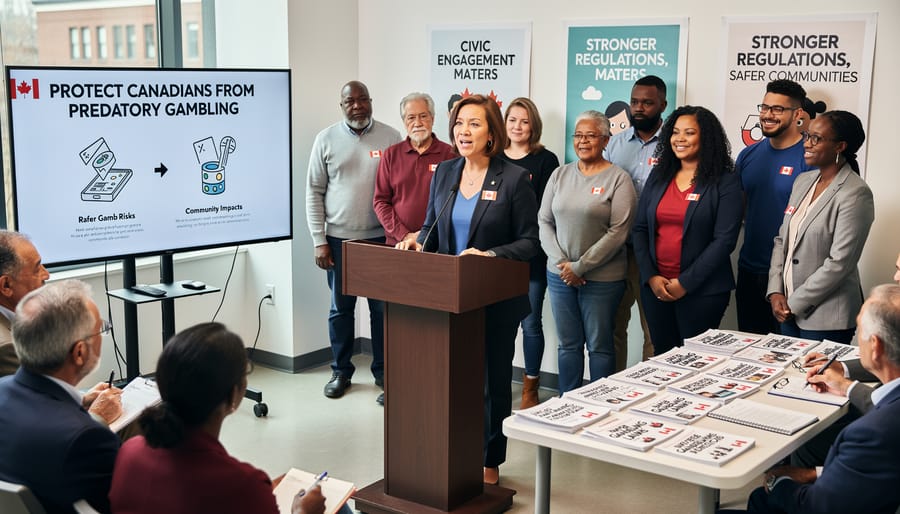
Your voice carries weight in shaping betting regulations that protect vulnerable communities. Provincial governments regularly seek public input on gambling policies, and your participation can make a tangible difference.
Start by identifying your Member of Provincial Parliament and contacting their office directly. Share personal stories or concerns about gambling harm in your community—these narratives resonate far more powerfully than statistics alone. Request meetings to discuss responsible betting safeguards, advertising restrictions, and support for those affected by gambling addiction.
Watch for regulatory consultation periods announced by provincial gaming authorities. These windows offer formal opportunities to submit written comments on proposed policy changes. Don’t let technical language intimidate you; speak from your values and lived experience.
Consider organizing a delegation from your faith community to meet with elected officials. Following the model of faith-based policy advocacy, collective voices amplify individual concerns. Invite your pastor, rabbi, or imam to participate, grounding your advocacy in shared values of human dignity and community wellbeing.
Provincial policies evolve through persistent, compassionate engagement. Your faithful presence in these conversations helps ensure that profit never overshadows the protection of our neighbours.
Support Those Affected in Your Community
Faith communities possess unique power to create safe spaces for healing. When members struggle with gambling addiction, compassionate action makes all the difference. Start by educating congregational leadership about warning signs: financial distress, withdrawal from community activities, or unexplained anxiety. Partner with local addiction services to host information sessions that destigmatize seeking help.
Create confidential support circles where individuals and families can share their experiences without judgment. Many Canadian organizations offer faith-compatible counseling resources that honor spiritual perspectives while providing evidence-based treatment pathways. Consider establishing a practical assistance fund to help families facing immediate crisis from gambling-related financial harm.
Remember that recovery is a journey requiring sustained community support. Assign compassionate volunteers as check-in partners who can offer encouragement and accountability. By walking alongside those affected with grace and practical resources, faith communities embody the transformative power of collective care while addressing a growing public health concern across Canada.
Partner with Organizations Making a Difference
Across Canada, dedicated organizations are championing responsible gambling policies and supporting those impacted by betting harms. The Responsible Gambling Council works tirelessly to reduce gambling-related harm through research, education, and treatment services. Meanwhile, provincial initiatives like the Ontario Problem Gambling Helpline connect individuals with immediate support and resources.
You can make a tangible difference by joining these efforts. Consider volunteering with local addiction support groups that serve individuals struggling with gambling dependencies, offering compassionate presence to those rebuilding their lives. Financial contributions to organizations advocating for stronger regulatory frameworks amplify voices calling for justice in this space. Faith communities can partner with these groups by hosting awareness sessions, creating safe spaces for honest conversations about gambling’s spiritual and financial toll, and mobilizing congregations to advocate for protective legislation.
Your involvement, whether through time, resources, or prayer, becomes part of a broader movement protecting vulnerable Canadians from predatory practices. Together, we can ensure that corporate profits never supersede human dignity and community wellbeing.
Remember Sarah from the beginning of this article? Her story didn’t have to end in financial ruin and family crisis. When communities recognize gambling harm as a justice issue rather than a personal failing, transformation becomes possible. Across Canada, faith communities, advocacy groups, and concerned citizens are standing together to demand stronger protections for vulnerable Canadians. They’re calling for advertising restrictions, robust self-exclusion programs, mandatory affordability checks, and meaningful investment in mental health support. Their efforts prove that policy change happens when ordinary people recognize their power to shape a more compassionate society.
This is our invitation to you: join this movement for justice. Whether you’re motivated by faith principles that call us to protect the vulnerable, or simply by a conviction that all Canadians deserve safety from predatory practices, your voice matters. Contact your Member of Parliament about gambling regulations. Support organizations working on addiction services. Share information with your community about the real costs of unregulated online betting. Most importantly, recognize that protecting Canadians from gambling harm isn’t separate from climate justice, human rights, or other causes you champion—it’s woven into the same fabric of building a society where dignity and well-being come before profit.
Stay informed and engaged with these critical justice issues by subscribing to our newsletter. Together, we can create the Canada we envision: compassionate, just, and protective of all its people.