
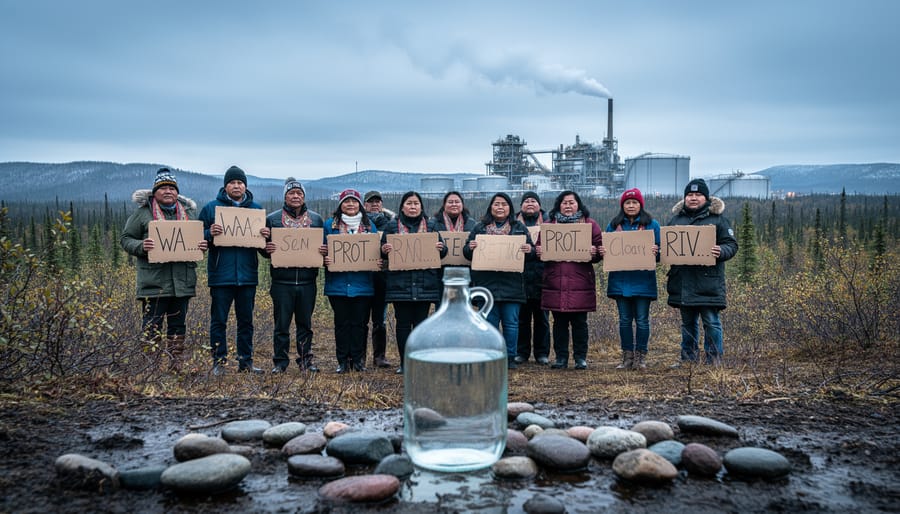
Environmental justice means communities most harmed by pollution and climate disruption are often those with the least power to protect themselves. Across Canada, that pattern shows up again and again: Indigenous communities forced to boil water while industries profit upstream, Black neighbourhoods breathing diesel fumes from freight corridors, and low-income families living on flood-prone land no one else wanted. But these same communities are leading some of the most powerful resistance movements this country has seen.
The seven examples in this article show what environmental justice looks like when it moves from concept to reality. You’ll see how Grassy Narrows continues fighting mercury contamination decades after the poisoning began, how Mi’kmaq water protectors blocked fracking in New Brunswick, and how residents in “Chemical Valley” forced governments to finally measure the air they’ve been breathing for generations. Each case reveals the same truth: environmental harm doesn’t happen by accident. It follows lines of race, class, and colonial power.
Understanding these stories matters because they expose how deeply environmental violence connects to Indigenous rights economic inequality, and systemic racism. They also show us what faithful advocacy looks like when communities refuse to accept that some lives matter less than corporate profit. These aren’t just cautionary tales. They’re blueprints for the kind of courage and persistence that changes laws, stops pipelines, and rebuilds the relationship between people and the land that sustains us all.
How We Chose These Environmental Justice Examples
Canada’s environmental justice landscape spans thousands of kilometers and dozens of communities, each with urgent stories to tell. We narrowed our focus to seven examples that collectively illuminate what justice in action looks like, applying clear standards to ensure meaningful representation.
Our selection criteria prioritized:
- Documented community impact with measurable outcomes or ongoing advocacy momentum
- Geographic diversity spanning Atlantic Canada to the Pacific coast, urban centers to remote regions
- Representation of marginalized populations facing disproportionate environmental burdens, including Indigenous nations, racialized communities, and low-income neighborhoods
- Alignment with values of human dignity, stewardship, and collective responsibility central to faith-driven justice work
- Evidence of successful policy change, legal recognition, or sustained community organizing
These standards ensure the examples aren’t just compelling stories but working models of how communities transform suffering into systemic change. Each case demonstrates that environmental justice isn’t abstract theory, it’s neighbours organizing, governments responding, and entire regions reimagining their relationship with land and people. The seven examples ahead show different pathways to justice while sharing common threads: persistence, community wisdom, and the refusal to accept that any population deserves pollution as their inheritance.
1. Aamjiwnaang First Nation’s Fight Against Chemical Valley Pollution
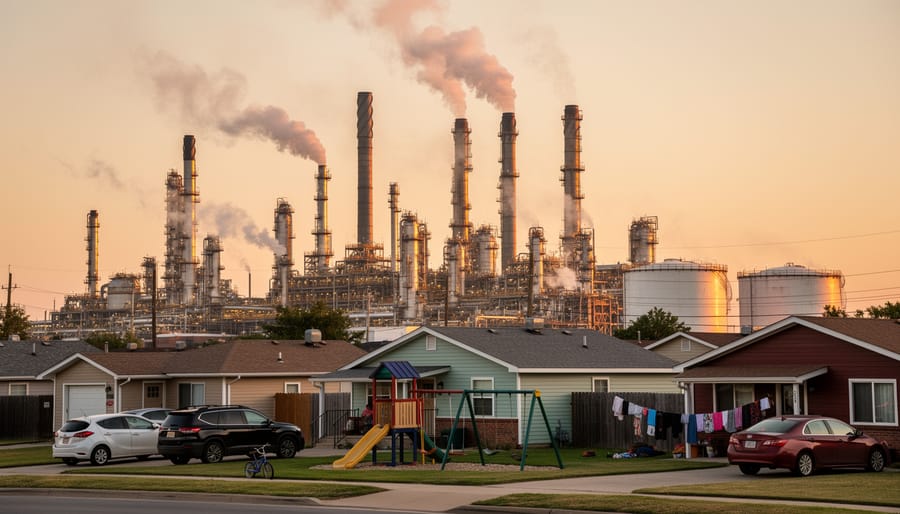
The Aamjiwnaang First Nation sits surrounded by over 40 petrochemical facilities in Sarnia, Ontario, an industrial concentration so dense locals call it Chemical Valley. For decades, this community has lived with what most Canadians would find unacceptable: air thick with benzene, sulphur dioxide, and other toxins, unusual cancer rates, and a disturbing demographic shift where twice as many girls are born as boys.
What makes Aamjiwnaang’s situation a clear environmental justice example isn’t just the pollution, but the power imbalance. These facilities operate on territory that was never ceded, yet the community had no meaningful say in their placement or regulation. When Aamjiwnaang members began experiencing respiratory illnesses, reproductive issues, and cancers at alarming rates, they didn’t wait for government intervention.
Community members conducted their own air quality studies, partnering with environmental scientists to document emissions the official monitoring failed to capture. Ada Lockridge and other residents walked the territory with handheld monitors, creating data that industrial lobbyists couldn’t dismiss. Their findings revealed pollution spikes during nights and weekends when regulatory oversight was minimal.
This grassroots research forced uncomfortable conversations. Aamjiwnaang pushed for 24-hour air monitoring, corporate disclosure of emissions, and meaningful consultation before facility expansions. They’ve won some battles, including increased monitoring and recognition in environmental assessments, though the fight continues.
Their advocacy demonstrates how environmental justice intertwines with Indigenous sovereignty. This isn’t just about cleaner air, it’s about the right to exist safely on ancestral lands, to protect future generations, and to have decision-making power over what happens in their backyard.
2. Africville’s Legacy and Halifax’s Environmental Racism Recognition
In 1964, the City of Halifax bulldozed Africville, a thriving Black community that had existed for over 150 years. Residents were forced from their homes, some loaded into garbage trucks, and relocated to public housing projects. The official reason was urban renewal, but the deeper truth was environmental racism: for decades, the city had deliberately placed hazardous facilities in and around Africville, including an infectious disease hospital, a slaughterhouse, and the city dump, while denying the community basic services like running water, sewers, and paved roads.
Africville’s destruction isn’t just history. It’s a blueprint that explains how environmental racism operates: targeting communities with least political power, layering hazards upon them, then using the resulting blight as justification for displacement. Survivors and descendants never stopped demanding recognition. Their persistence sparked a broader reckoning.
In October 2022, Nova Scotia became the first jurisdiction in Canada to legislatively recognize environmental racism. The Environmental Racism Prevention Act requires the provincial government to examine whether communities of colour and Indigenous communities face disproportionate environmental burdens, and to consider equity in future approvals of industrial facilities and waste sites. It’s a direct legacy of Africville’s story and decades of advocacy by Black and Indigenous communities across the province who documented similar patterns in their own neighborhoods.
The law won’t undo what happened to Africville, now commemorated by a museum and church reconstruction on the site. But it represents something Africville residents never had: official acknowledgment that their self-determination and dignity matter in environmental decisions, and a framework, however imperfect, to prevent future communities from suffering the same fate.
3. Toronto’s Environmental Justice Atlas: Mapping Climate Vulnerability
Toronto became the first Canadian city to create a comprehensive Environmental Justice Atlas, a digital mapping tool that reveals how environmental burdens stack unevenly across neighborhoods. Launched in collaboration with community advocates, the atlas overlays data on air pollution, extreme heat exposure, proximity to industrial sites, and access to green space with demographic information including income, race, and housing status.
The maps tell a stark story. Northwestern neighborhoods like Jane-Finch and Mount Dennis, home to large immigrant and racialized populations, appear as climate vulnerability hotspots: dense housing with minimal tree cover, major roadways producing pollution, and few parks where residents can find relief during heat waves. Meanwhile, wealthier areas downtown and in the north show abundant green canopy and lower exposure to environmental hazards, highlighting how health inequality takes spatial form.
What makes Toronto’s atlas an environmental justice example is how communities use it. Faith-based organizations like the Sisters of St. Joseph employed the data to justify targeted tree-planting campaigns in priority neighborhoods. Tenant advocacy groups presented heat island maps to city council, securing funding for cooling centers and green infrastructure in vulnerable areas. Residents without planning expertise now possess evidence-based tools to challenge development proposals that would worsen environmental conditions.
The atlas transformed abstract inequity into visible patterns that demand action. It demonstrates how transparency and accessible data shift power toward communities bearing environmental costs, turning mapping into movement building.
4. Indigenous-Led Conservation in the Great Bear Rainforest
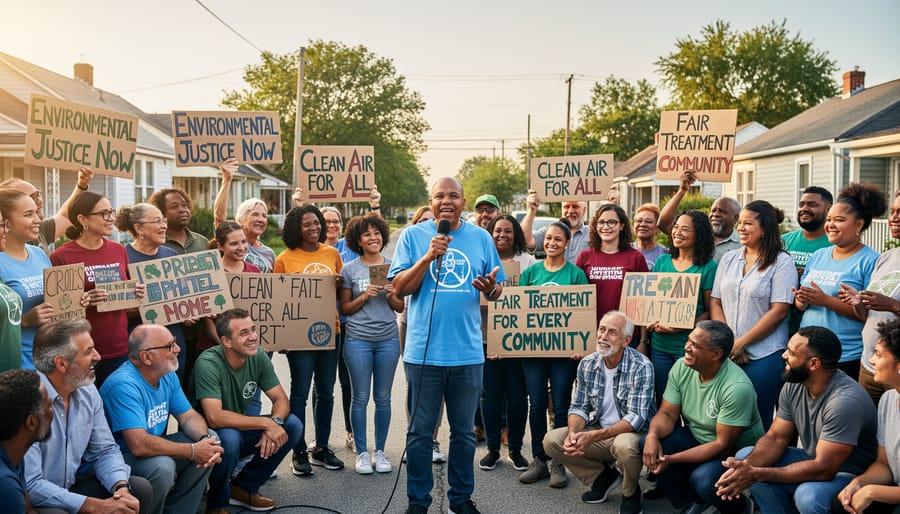
The Great Bear Rainforest agreement stands as one of Canada’s most remarkable environmental justice achievements, proving that Indigenous self-determination and ecological protection can thrive together. In 2016, after two decades of advocacy and negotiation, coastal First Nations and the British Columbia government formalized protections for 85% of this temperate rainforest, an area roughly the size of Ireland where thousand-year-old cedars tower above salmon-rich streams.
This wasn’t conservation imposed from above. Twenty-six First Nations led the process, centering their traditional knowledge and territorial rights. They rejected the false choice between environmental protection and economic survival, instead designing a model where community stewardship creates sustainable livelihoods. Carbon offset programs, eco-tourism operations, and selective sustainable forestry now generate revenue while keeping the forest intact. These alternatives address the critical links between income and health that industrial logging once threatened, offering economic stability without the boom-bust cycles that devastated communities.
The agreement recognizes Indigenous nations as decision-makers, not stakeholders. They hold governance authority through entities like the Coast Funds, directing how conservation investments flow into their communities. Guardians programs employ community members to monitor watersheds, wildlife, and cultural sites using both scientific methods and ancestral practices passed down through generations.
This model redefines what environmental justice looks like: not just protecting land from harm, but restoring Indigenous peoples’ rightful authority over their territories. When those who know the land best control its future, everyone benefits, the forest, the salmon, the spirit bear, and the communities whose identity and wellbeing are inseparable from this place.
5. Winnipeg’s North End Water Pollution and Community Mobilization
Every spring, the same neighborhoods in Winnipeg’s North End brace for the flooding that wealthier areas rarely see. For decades, aging water infrastructure and inadequate drainage systems have turned heavy rains into crisis events for residents, many of them low-income families and Indigenous people living in older housing stock. Sewage backups contaminate basements. Streets become impassable. Children wade through water mixed with overflow from overwhelmed systems.
What sets this story apart is how residents refused to accept flooding as inevitable. In 2018, community organizers from the North End Water Pollution Coalition began documenting every flood event, mapping which streets failed first, and connecting the dots between infrastructure neglect and the neighborhood’s demographics. They brought this evidence to city council meetings, month after month.
Faith communities became crucial allies. North End churches opened their basements as meeting spaces and cooling centers during flood events. Pastors testified alongside residents about the dignity every family deserves, including functional plumbing and safe drinking water. This spiritual framing helped shift the conversation from mere infrastructure repair to justice and human worth.
The victories came in pieces. In 2020, the city committed to prioritizing North End upgrades in its capital budget. By 2022, three streets received new drainage infrastructure. Community monitoring continues, because the work remains incomplete. Residents now serve on advisory committees that determine which blocks get upgraded next, a voice they’d been denied for generations. The flooding hasn’t stopped, but the power dynamic has shifted.
6. Montreal’s Heat Island Action in Vulnerable Neighborhoods
Montreal’s sweltering summers hit hardest in neighborhoods the rest of the city often overlooks. Parc-Extension, Petite-Bourgogne, and parts of Hochelaga-Maisonneuve bake under temperatures several degrees hotter than wealthier, tree-lined districts. These low-income areas, home to many immigrants and racialized communities, face what urban planners call heat islands: stretches of asphalt and concrete that trap heat, with few trees or green spaces to provide relief.
For elderly residents in third-floor walkups without air conditioning, or families crowded into poorly ventilated apartments, extreme heat isn’t just uncomfortable, it’s life-threatening. Heat-related deaths in Montreal during the 1990s concentrated in precisely these neighborhoods, exposing how climate impacts follow lines of poverty and race.
The city responded with an environmental justice lens. Starting in the early 2000s, Montreal prioritized tree-planting initiatives in heat-vulnerable areas, adding thousands of trees to streets that had been barren. The city invested in cooling centers, splash pads, and water access points in parks serving these communities. Community gardens sprouted in vacant lots, creating green oases that lower ambient temperatures while providing fresh food and gathering spaces.
Faith congregations joined the effort, opening their buildings as cooling refuges during heat waves and organizing garden projects that combined climate adaptation with community support. These interventions acknowledge a core environmental justice principle: climate adaptation must flow toward those with the least resources and greatest exposure, not reinforce existing privilege.
7. Grassy Narrows’ Mercury Contamination Justice Campaign
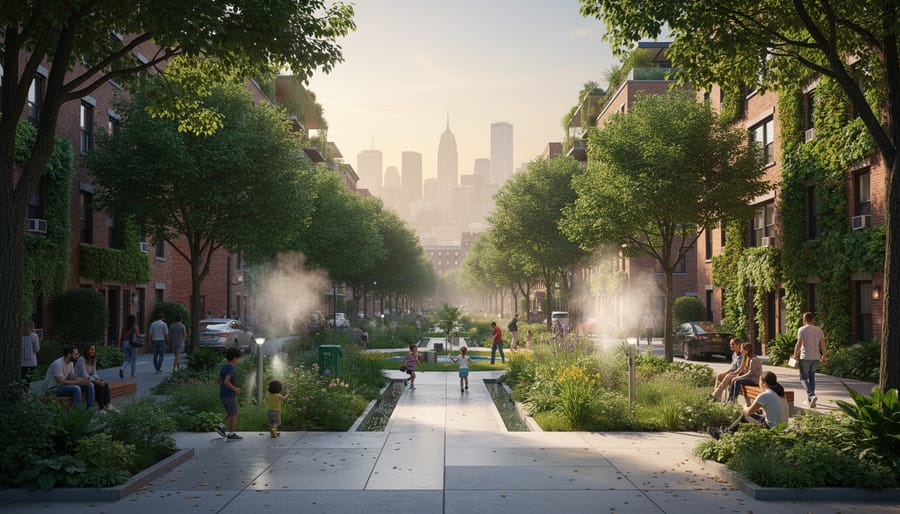
For over half a century, the Anishinaabe community of Grassy Narrows in northwestern Ontario has lived with the consequences of one of Canada’s worst cases of industrial poisoning. Between 1962 and 1970, a pulp and paper mill upstream dumped an estimated 9,000 kilograms of mercury into the Wabigoon River system, contaminating the fish that form the foundation of the community’s diet, economy, and cultural practices. The methylmercury that bioaccumulated in the food chain caused devastating neurological damage across generations, with symptoms including loss of coordination, vision and hearing impairment, and cognitive difficulties.
What makes Grassy Narrows an environmental justice example is not just the contamination itself but the community’s unwavering persistence in demanding accountability and remediation despite decades of government inaction. Chief and council have maintained continuous advocacy since the crisis was first documented in the 1970s, supported by a network of faith communities, environmental groups, and solidarity activists across Canada. Their justice campaign has documented intergenerational trauma, birth defects, and ongoing health impacts while successive governments delayed, studied, and minimized the crisis.
Recent years have brought meaningful, if incomplete, progress. In 2020, the federal and provincial governments committed $85 million toward a mercury care home and treatment center in the community. In 2023, further commitments addressed river remediation research, though debate continues about the feasibility and scope of cleanup. These milestones represent justice still unfolding rather than achieved: the contamination persists, health impacts continue, and the community’s sovereignty over their land and waters remains compromised. Faith-based allies have played a crucial role in amplifying Grassy Narrows’ voice, organizing solidarity events, and pressuring political leaders, demonstrating how sustained witness and advocacy can shift the timeline of justice even when full restoration remains distant.
Taking These Lessons Forward: Your Role in Environmental Justice
The seven examples share a vital truth: environmental justice isn’t delivered from above, it’s claimed from below. Whether fighting petrochemical pollution in Sarnia or demanding mercury remediation in Grassy Narrows, marginalized communities organized, researched, testified and refused to accept harm as inevitable. Policy change followed persistent pressure, not goodwill. Faith communities proved essential allies, offering moral authority, meeting spaces, and sustained solidarity when institutions looked away.
You don’t need to lead a movement to contribute. Start by learning which communities near you face disproportionate environmental burdens, pollution, flooding, heat islands, contaminated water. Attend a public hearing on zoning, waste facilities or infrastructure projects affecting vulnerable neighborhoods. Your presence matters. If you’re part of a faith community, ask how your congregation can support local environmental justice campaigns through space, resources or advocacy.
Support organizations doing this work, whether that’s an Indigenous-led land trust, a tenant association fighting slumlord neglect, or groups mapping climate vulnerability in your city. Share their stories. Environmental justice requires witnesses willing to see and allies willing to act. These seven examples prove change is possible when people refuse to let geography or income determine who breathes clean air, drinks safe water, or survives extreme heat. The work continues, and it needs you.
Common Questions About Environmental Justice in Canada
What makes an issue environmental justice versus just environmental?
Environmental justice focuses on how environmental harms and benefits are distributed across communities, particularly examining whether marginalized groups bear a disproportionate burden. An environmental issue becomes an environmental justice issue when pollution, climate impacts, or lack of green space systematically affects low-income neighborhoods, racialized communities, or Indigenous peoples more severely than wealthy or privileged areas.
How can faith communities contribute to environmental justice?
Faith communities bring unique strengths including trust networks, meeting spaces, moral authority, and the ability to frame environmental justice as a spiritual calling rooted in dignity and stewardship. Churches, mosques, synagogues, and temples can amplify affected communities’ voices, provide solidarity during campaigns, host educational events, and leverage their institutional influence to pressure governments and corporations for change.
What’s the difference between climate justice and environmental justice?
Climate justice specifically addresses how climate change impacts and climate policy affect different communities unequally, while environmental justice encompasses a broader range of issues including pollution, access to green space, water quality, and toxic waste. Climate justice is essentially a subset of environmental justice, though the two movements share common principles about equity and who bears the costs of environmental degradation.
How can I identify environmental injustice in my own community?
Look for patterns: Are industrial facilities, highways, or waste sites located near low-income or racialized neighborhoods? Do certain areas lack trees, parks, or clean water access? Check health data for asthma rates, heat-related illnesses, or cancer clusters that correlate with geography and income. Talking to longtime residents often reveals histories of neglect, contamination, or displacement that official records obscure.
These questions reflect what people wrestling with environmental justice ideas genuinely wonder about. The answers above aren’t meant to be exhaustive, but they give you a practical framework for recognizing and engaging with these issues where you live. Understanding the distinctions and entry points matters because environmental justice isn’t abstract theory. It’s about real neighbors breathing polluted air, real families without shade on scorching days, and real communities organizing for change despite systemic barriers.