
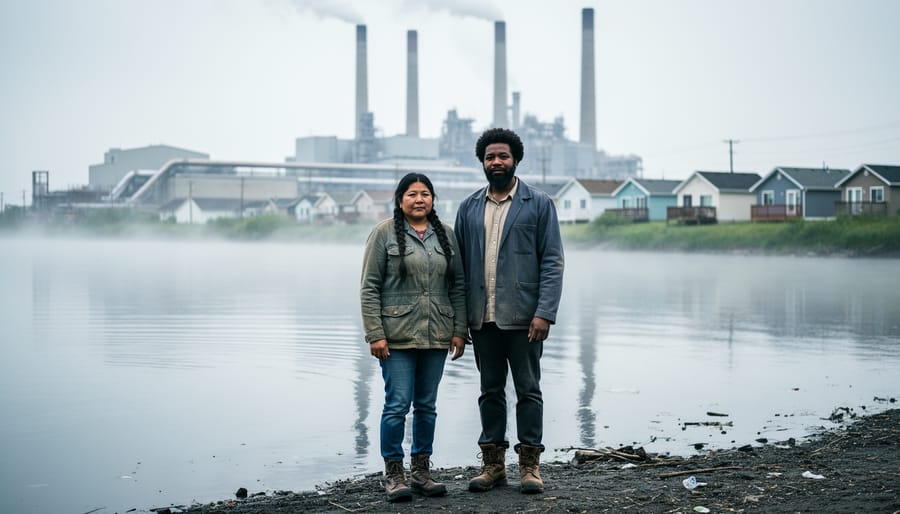
Environmental justice communities are neighborhoods and populations who bear a disproportionate burden of pollution, climate impacts, and ecological harm because of systemic inequities rooted in race, income, and geography. Across Canada, these communities include Indigenous reserves facing unsafe drinking water, low-income urban areas surrounded by industrial facilities, racialized neighborhoods exposed to higher air pollution, and rural regions dealing with toxic waste and resource extraction. The pattern is clear: those with the least power to resist environmental hazards are forced to live with the greatest risks.
This isn’t coincidence. Decades of zoning decisions, government policy, and corporate practices have pushed polluting industries toward communities already marginalized by poverty and discrimination. Indigenous peoples, in particular, carry the weight of environmental injustice on unceded territories where resource extraction continues without meaningful consent. Black and racialized Canadians in cities like Toronto and Montreal breathe dirtier air and live closer to highways and factories than their wealthier, whiter neighbors.
Understanding environmental justice communities means recognizing that climate change and pollution are not just ecological crises but profound human rights violations. The same families experiencing flooding from inadequate infrastructure, respiratory illness from poor air quality, and poisoned water are also denied fair access to decision-making processes that shape their health and futures.
For people of faith and conscience, this reality demands a response grounded in solidarity and the inherent dignity of every person. Environmental justice is about honoring creation by protecting the most vulnerable among us, ensuring that no community is sacrificed for another’s prosperity.
What Are Environmental Justice Communities?
Environmental justice communities are neighborhoods, towns, and regions where residents bear an unfair share of environmental harm, not by chance, but because of who they are and where they live. These are the places where pollution clusters, where industrial facilities and waste sites get built close to homes and schools, where floods hit harder and heat waves last longer. The people in these communities face environmental dangers at levels that more privileged areas would never tolerate, and this disparity follows clear patterns of race, income, and geographic isolation.
In Canada, environmental injustice typically concentrates along three intersecting lines. First, race and Indigeneity: First Nations reserves near resource extraction sites, immigrant neighborhoods downwind from refineries, and communities of color living closest to highways and heavy traffic. Second, income: low-wage families in rental housing near industrial zones because it’s the only affordable option, while wealthier neighborhoods benefit from parks, tree cover, and distance from pollution sources. Third, geography: remote communities without the political power to resist becoming dumping grounds, rural areas downstream from industrial agriculture, and regions where distance from decision-makers means environmental concerns go unheard.
The result is measurable harm. Children in these communities develop asthma at higher rates. Cancer clusters appear. Drinking water fails safety tests year after year. Climate disasters destroy homes that families can’t afford to rebuild. These aren’t separate environmental problems, they’re symptoms of the same injustice that treats some lives as more expendable than others.
Understanding environmental justice communities means recognizing that environmental protection has never been equal in Canada. It means seeing that zip codes predict exposure to toxins, that privilege buys distance from danger, and that the communities carrying the heaviest environmental burdens are the same ones with the least power to fight back.
Environmental Justice Communities Across Canada
Indigenous Communities
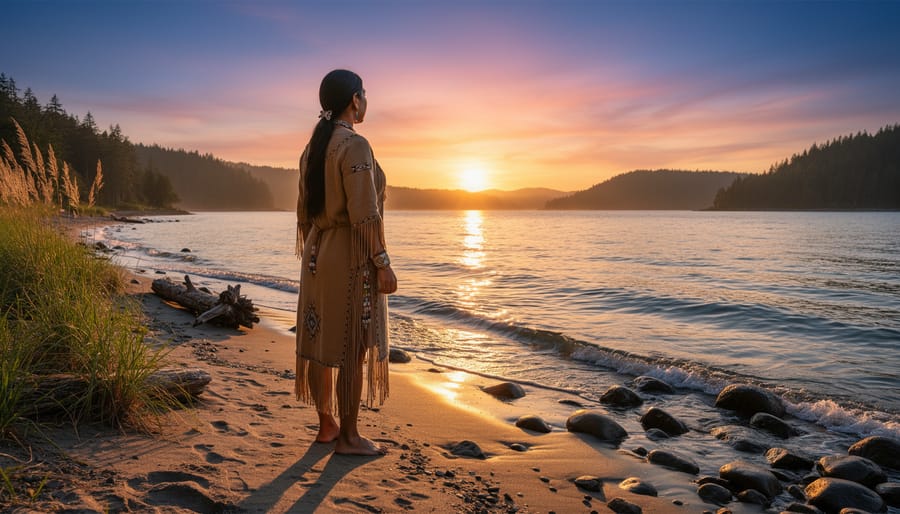
Indigenous peoples in Canada bear a crushing and unjust environmental burden. First Nations, Métis, and Inuit communities face mercury poisoning in their food sources, watched resource companies tear up sacred land without consent, and endure climate change that erases entire ways of life passed down through generations. These are not abstract problems. Grassy Narrows First Nation in Ontario has battled mercury contamination in their waters for over fifty years, poisoning fish that once fed families and now threatens children’s development. In northern British Columbia, pipeline projects carve through traditional territories, fragmenting caribou habitat and threatening the hunting and trapping that sustain Wet’suwet’en culture. The Arctic warms twice as fast as the rest of the planet, melting the ice that Inuit communities depend on for travel, hunting, and identity itself.
These realities reflect broader patterns of environmental justice examples across the country, but for Indigenous peoples the stakes include cultural survival. When extractive projects harm Indigenous lifeways they sever the connection between people and land that defines who they are. Yet Indigenous communities are not merely victims. They are leading the fight for environmental protection, drawing on millennia of stewardship knowledge. Their Indigenous rights include the right to protect water, air, and land for future generations, a responsibility they have never abandoned, even when the wider society forgot it.
Low-Income Urban Neighborhoods
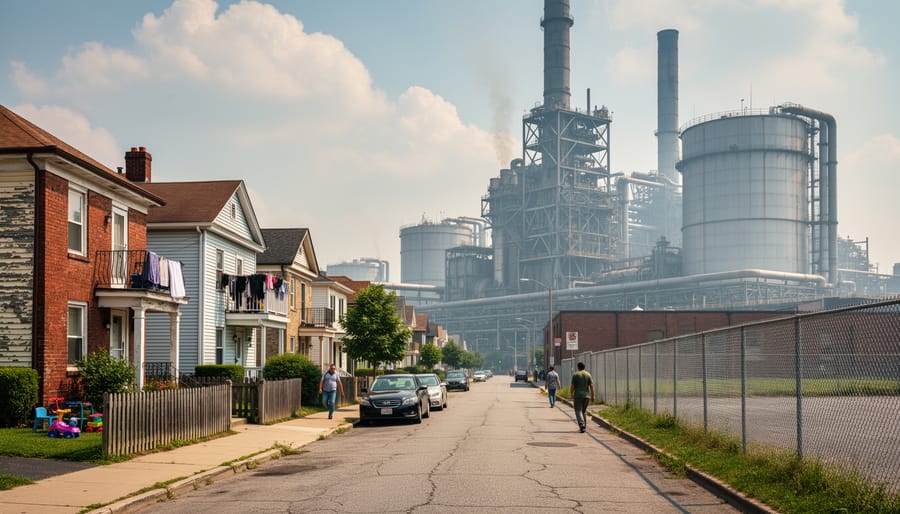
In Canada’s cities, industrial zones don’t appear randomly. They cluster near neighborhoods where land is cheaper and political influence weaker, places where low-income families live. Factories, highways, waste facilities, and rail yards become neighbors to apartment buildings and schools, creating what public health researchers call “cumulative exposure”: multiple pollution sources layered on top of each other.
Walk through Toronto’s east end industrial corridor or Montreal’s east side, and you’ll see the pattern. Children play in parks shadowed by smokestacks. Families hang laundry while trucks idle at loading docks across the street. These neighborhoods breathe air that violates health standards more frequently than affluent areas just kilometers away. A 2019 analysis found that PM2.5 levels, tiny particles that penetrate deep into lungs, were consistently higher in lower-income postal codes across major Canadian cities.
The injustice compounds. These same neighborhoods often lack tree cover and green space, creating urban heat islands where temperatures soar 5-10 degrees higher than leafy suburbs during heat waves. Concrete absorbs and radiates heat, but trees are expensive to plant and maintain, so they get prioritized elsewhere. When heat advisories warn vulnerable people to stay cool, families in these areas have nowhere to go, no air conditioning, no nearby park with shade.
The cruelest irony: the people breathing the dirtiest air and enduring the hottest summers have the least capacity to protect themselves. They can’t afford air purifiers, can’t move, can’t take sick days when pollution triggers asthma attacks. Environmental harm follows the contours of poverty, and poverty strips away defenses.
Rural and Remote Communities
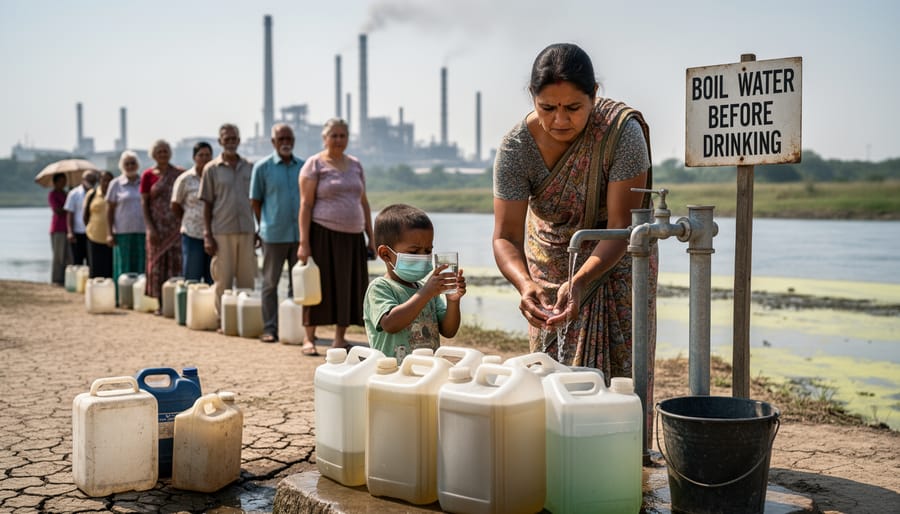
Rural and remote communities across Canada face distinct environmental justice challenges that often go unseen by urban populations. Geographic isolation compounds these burdens, distance from decision-making centers means less political influence, while limited infrastructure leaves communities vulnerable when environmental threats emerge.
Agricultural regions bear heavy exposure to pesticides and fertilizers. Farm families and seasonal workers breathe drift from chemical applications, drink from wells that leach nitrates, and watch soil health decline under intensive practices they may not control. Children in farming communities show higher rates of certain cancers and developmental issues, yet rural health services lack resources to address these patterns adequately.
Water infrastructure remains profoundly unequal. While Canadian cities take clean drinking water for granted, hundreds of rural communities, particularly small municipalities and unincorporated areas, struggle with outdated treatment systems, contaminated groundwater, or no municipal service at all. When a well runs dry or tests positive for bacteria, rural families face impossible choices about safety versus affordability.
Climate change threatens livelihoods directly. Farmers contend with unpredictable frost dates, drought, and extreme weather that destroys crops and erodes topsoil built over generations. Coastal fishing communities watch stocks shift northward as waters warm, undermining economies and food traditions simultaneously. These aren’t abstract future scenarios, they’re this year’s harvest, this season’s catch, this family’s survival.
Rural Canadians possess deep environmental knowledge born from working the land and water. Their voices deserve equal weight in shaping the policies that govern their lives and livelihoods.
Why Environmental Injustice Persists
Environmental injustice doesn’t happen by accident. It’s the predictable outcome of systems and policies that have consistently valued some lives and communities over others. Understanding why these inequities persist means looking beyond individual bad actors to the structures that make environmental harm almost inevitable for certain groups of people.
Canada’s environmental injustices are rooted in choices made generations ago that continue to shape who breathes clean air and who doesn’t, whose water is safe and whose isn’t. These aren’t just historical wrongs, they’re active, ongoing patterns maintained through laws, economic pressures, and power imbalances that most Canadians never see.
At the heart of persistent environmental injustice are several interconnected systemic factors:
- Colonial legacy and ongoing impacts that dispossess Indigenous peoples from traditional lands while exploiting those lands for resource extraction
- Exclusion from decision-making processes that allows polluting facilities to be sited without meaningful input from affected communities
- Economic inequality and lack of political power that leaves marginalized communities unable to fight back against environmental threats
- Zoning and land-use policies that deliberately concentrate hazards in neighborhoods where property values are low and resistance is weakest
- Gaps in environmental regulation enforcement that create a two-tier system where violations in wealthy areas get swift action while similar problems in poor communities go unaddressed
These factors feed each other. Indigenous communities displaced by colonization often lack the resources and political clout to oppose new industrial projects on their remaining lands. Low-income neighborhoods zoned for industrial use attract polluting facilities precisely because residents can’t afford to move and lack connections to city councils. Regulatory agencies stretched thin prioritize complaints from communities with lawyers and political influence.
The economic incentive structure also drives injustice. Locating hazardous facilities in marginalized communities costs less, land is cheaper, legal challenges are fewer, and companies face minimal public relations consequences. The benefits of industrial activity flow to shareholders and consumers across the country, while the health costs concentrate in fence-line communities that see none of the profits.
Political power matters enormously. Communities with resources hire consultants, lawyers, and public relations firms when threatened. They show up at hearings in force. Politicians return their calls. Environmental justice communities often lack these advantages, making them targets of convenience for unwanted land uses. This isn’t conspiracy, it’s the logical outcome of systems that privilege wealth and connections over human dignity.
Breaking these cycles requires confronting uncomfortable truths about how power works in Canada and committing to structures that center the voices and wellbeing of those currently pushed to the margins.
The Health and Human Rights Impact
Environmental injustice isn’t abstract policy language, it’s children struggling with asthma in homes beside highways, families choosing between groceries and bottled water because their tap isn’t safe, and elders watching traditional foods disappear from lands poisoned by industry. These communities pay the steepest price for pollution they didn’t create.
The health burden hits hardest and earliest. Residents of environmental justice communities face significantly higher rates of respiratory disease, cancer, cardiovascular problems, and developmental delays in children. A First Nations community downstream from industrial operations might see elevated mercury levels in fish that once sustained them, forcing impossible choices between cultural tradition and health safety. Urban families in neighborhoods ringed by refineries breathe air that triggers chronic illness, leading to missed school days, emergency room visits, and lifelong health struggles. The connection between socioeconomic status and health deepens when poverty leaves families unable to afford treatments, relocate, or even access clean alternatives.
Beyond physical health, environmental injustice extracts economic and cultural costs that compound over generations. Medical bills drain family savings. Contaminated lands sever connections to traditional practices and food sources that sustained Indigenous peoples for millennia. Property values plummet in polluted areas, trapping residents who cannot afford to leave. Parents carry the weight of knowing their neighborhood itself threatens their children’s futures.
This is fundamentally a human rights crisis. Every person deserves clean air, safe water, and a healthy environment, yet environmental racism and economic marginalization deny these basics to the most vulnerable. Our faith calls us to recognize this injustice for what it is: a violation of human dignity that demands our attention, our advocacy, and our solidarity with those bearing burdens they never chose.
How Faith Communities Can Stand in Solidarity
Standing with environmental justice communities isn’t a single action, it’s an ongoing commitment that begins with listening and learning from those who live these realities every day. For faith communities across Canada, this work connects directly to our call to seek justice, love mercy, and walk humbly alongside our neighbors.
Start by educating yourself about the specific environmental challenges facing communities near you. Understand how Indigenous nations in your region are affected by resource extraction, or how low-income neighborhoods experience disproportionate pollution. This knowledge builds empathy and helps you speak accurately when you advocate. Share what you learn within your congregation or community group, creating space for conversations that connect environmental justice to your shared values of dignity and stewardship.
Listen first, then amplify. When environmental justice communities speak, at town halls, in media, through community organizing, your role is often to listen, learn, and then use whatever platform or influence you have to amplify their voices rather than speak for them. Attend public consultations about industrial projects, zoning changes, or environmental policy, and support the positions articulated by affected communities. Your presence and testimony can help counter well-resourced industry voices.
- Educate yourself and your community about environmental injustices affecting nearby neighborhoods and Indigenous nations
- Support Indigenous-led environmental initiatives through donations, volunteering, or public solidarity
- Advocate for stronger environmental protections in vulnerable areas by contacting elected officials and supporting protective policies
- Participate in public consultations on projects that affect environmental justice communities
- Reduce your own environmental footprint with justice in mind, considering how your consumption choices impact others
- Volunteer or donate to organizations working directly with affected communities
When you find local support networks, look for grassroots groups led by the communities themselves. These organizations know what their neighbors need and deserve resources that honor their leadership. Your financial support, volunteer hours, and consistent presence matter, but they’re meaningful only when they follow the direction of those closest to the struggle.
Finally, examine your congregation’s or community’s own environmental footprint. Where does your waste go? How does your energy use affect others? Justice-oriented living means making choices that don’t shift environmental burdens onto vulnerable communities. It’s not about perfection, it’s about aligning your actions with your values and staying accountable to the people most affected.
Common Questions About Environmental Justice Communities
Understanding environmental justice communities often raises important questions, especially for those newly encountering this concept. These answers clarify what environmental justice means, how it differs from mainstream environmentalism, and how you can engage with these issues in your own Canadian context.
What’s the difference between environmentalism and environmental justice?
Environmentalism traditionally focuses on conservation and protecting nature, while environmental justice centers on how environmental harms and benefits are distributed among people, particularly examining why certain communities bear disproportionate burdens. Environmental justice asks not just “how do we protect the environment?” but “who is protected, and who is harmed?”
Are environmental justice issues only about pollution?
No. While pollution exposure is a major concern, environmental justice also encompasses access to clean water, green space, healthy food, climate resilience, meaningful participation in decisions affecting communities, and the right to maintain cultural and spiritual connections to land. It’s about the full spectrum of environmental quality and decision-making power.
How can I learn which communities near me face environmental injustice?
Start by examining where industrial facilities, waste sites, and highways are located in your city or region, then notice which neighborhoods they border. Local Indigenous organizations, community health centers, and environmental groups often document these patterns and can provide insight into ongoing struggles.
Don’t environmental regulations protect everyone equally?
Regulations set minimum standards, but enforcement is often weaker in marginalized communities, and cumulative impacts from multiple sources aren’t adequately addressed. Additionally, communities with less political power have historically been excluded from decision-making processes about what gets built in their neighborhoods, meaning harm occurs before regulations even apply.
Another common question concerns the relationship between climate change and environmental justice. Climate change amplifies existing environmental injustices because its impacts, extreme heat, flooding, wildfires, food insecurity, hit hardest in communities already facing environmental burdens and economic marginalization. Indigenous communities in Canada’s North experience accelerated climate disruption that threatens food sources and cultural practices, while low-income urban residents lack resources to adapt to heat waves or relocate from flood zones. Climate justice and environmental justice are inseparable: both demand we address who suffers most and why.
Some people wonder whether focusing on specific communities creates division rather than unity in environmental movements. The opposite is true. Acknowledging that environmental harm falls unevenly is the first step toward genuine solidarity. When we recognize that a refinery’s pollution doesn’t drift equally into all neighborhoods, or that mercury contamination devastates specific First Nations while others remain unaffected, we can direct our collective action where it’s most needed. Unity built on ignoring disparities isn’t real unity, it’s asking those who suffer most to stay quiet for the sake of comfort.
You might also ask whether environmental justice is a new concept or a recent political framework. Indigenous peoples have practiced and advocated for what we now call environmental justice for generations, long before the term existed. The formal environmental justice movement emerged in the 1980s when communities of color in the United States organized against toxic waste dumping, but the underlying principle, that all people deserve clean air, water, and land regardless of race or income, is ancient. In Canada, Indigenous resistance to environmental destruction and advocacy for land rights has carried this truth forward through centuries of colonization.
Finally, people sometimes question whether individual Canadians can make a difference when environmental injustice stems from large systems and powerful industries. Your voice and choices matter more than you might think. Municipal decisions about zoning, provincial policies on industrial permits, and federal commitments to Indigenous rights all respond to public pressure. Showing up at a city council meeting, supporting Indigenous-led campaigns, choosing where to bank and shop based on corporate environmental justice records, and talking about these issues in your faith community or social circles, these actions compound. Change happens when enough people decide that environmental injustice is unacceptable and act accordingly. You’re not alone in this work, and every act of solidarity strengthens the movement for a Canada where everyone can breathe clean air and drink safe water.